
Pedestrian refuge islands are raised
areas positioned in the centre of a road, allowing pedestrians to cross in two
stages. Also known as a traffic refuge island, this type of crossing provides a
designated place for pedestrians to pause and assess one direction of traffic
at a time.
By dividing the journey into two shorter
sections, refuge islands can make wide or busy roads easier to cross and help
create a safer, more manageable crossing environment.
How Do Pedestrian Refuge Islands Work?
A refuge island crossing divides the road
into two separate crossing stages. Rather than waiting for both directions of
traffic to be clear, pedestrians can cross one section before waiting on the
central refuge island to complete the second stage.
Refuge islands usually incorporate
dropped kerbs to provide an accessible crossing point, while tactile paving
helps visually impaired pedestrians identify the edge of the carriageway.
Depending on the location and design, a
refuge island may also include:
●
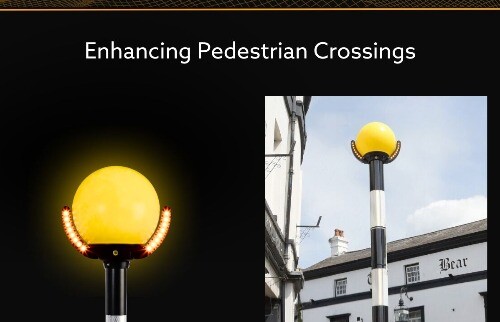
Illuminated refuge beacons
●
Keep-left signs and bollards
●
Sign-lighting solutions
●
Pedestrian spotlights
●
Road markings
●
Tactile paving
These features can help make the crossing
point more visible to both pedestrians and approaching motorists.
How Do Refuge Islands Improve Road Safety?
Pedestrian refuge islands reduce the
distance that pedestrians need to cross at one time. This enables them to
concentrate on traffic travelling in one direction before proceeding across the
second half of the road.
The central waiting area can be
particularly helpful for people who may need more time to cross, making wide or
busy roads easier to navigate.
Most pedestrian refuge islands are
uncontrolled crossings. This means pedestrians must wait for a suitable gap in
the traffic before crossing, as motorists are not automatically required to
stop.
Where Are Pedestrian Refuge Islands Typically Used?
Pedestrian refuge islands are commonly
installed on wide or busy two-way roads where crossing the full carriageway in
one movement may be difficult.
They may be considered near residential
areas, schools, shops, public transport routes and other locations where there
is regular pedestrian activity. Their suitability will depend on the road
layout, traffic conditions, visibility and the needs of people using the
crossing.
When Might a Pedestrian Refuge Island Be Appropriate?
Highway authorities may consider
installing a pedestrian refuge island where the width of the road, traffic
levels, vehicle speeds, pedestrian demand and surrounding environment make a
two-stage crossing appropriate.
Each location should be assessed
individually to determine the most suitable crossing arrangement. In some
circumstances, a zebra crossing or signal-controlled crossing may provide a
more appropriate solution.
Refuge Islands vs Signal-Controlled Crossings
The main difference between a pedestrian
refuge island and a signal-controlled crossing is how traffic is managed.
A refuge island is generally an
uncontrolled crossing. It provides a central waiting area, but pedestrians must
identify a safe gap in each direction of traffic.
Signal-controlled crossings use traffic
lights to stop vehicles and provide pedestrians with a dedicated period in
which to cross. Puffin crossings and toucan crossings are common examples, with
toucan crossings designed for use by both pedestrians and cyclists.
Additional Safety Features Used Alongside Refuge Islands
The safety and visibility of a pedestrian
refuge island can be supported by several complementary features. These
pedestrian safety measures may include tactile paving, road markings, keep-left
signs, illuminated bollards, refuge beacons, pedestrian spotlights and
supplementary lighting.
The most appropriate measures will depend
on the road layout and surrounding environment. When correctly specified, they
can help drivers identify the island, guide traffic around the raised area and
make the crossing point more visible.
How Can Portland Traffic Help?
Creating safer pedestrian crossing
environments depends on high-quality traffic safety products that perform
reliably in a range of conditions.
With more than 100 years of combined
industry experience, Portland Traffic manufactures and supplies innovative
traffic safety solutions for highway professionals and local authorities across
the UK.
Our comprehensive product range includes:
●
LED Belisha beacons
●
Solar-powered pedestrian crossing
systems
●
Illuminated refuge beacons
●
Bollard lighting units
●
Sign-lighting solutions
●
Pedestrian spotlights
●
Smart monitoring systems for
traffic assets
The BaseMate Versatile Bollard Lighting Unit
Clear and reliable illumination can help
drivers identify a refuge island and pedestrian crossing point after dark.
Illuminated bollards can also improve the visibility of the traffic island and
help guide motorists safely around it.
Portland Traffic manufactures BaseMate, a
versatile bollard lighting unit featuring a built-in dusk-to-dawn controller.
Designed to upgrade or replace existing bollard lighting quickly and
efficiently, BaseMate provides reliable, energy-efficient illumination in a
range of conditions.
Contact the Portland Traffic team to
learn more about BaseMate and our range of pedestrian crossing and traffic
safety solutions.
FAQs
What is the
purpose of a pedestrian refuge island?
A pedestrian refuge island divides a road
crossing into two shorter stages. It provides a central waiting area where
pedestrians can pause and assess traffic travelling in one direction at a time,
making wide or busy roads easier to cross.
Are refuge
islands safer than zebra crossings?
Neither option is automatically safer in
every location. At a zebra crossing, drivers and riders should give way to
pedestrians waiting to cross and must give way once a pedestrian is on the
crossing. At an uncontrolled refuge island, pedestrians do not have the same
priority and must wait for a suitable gap in the traffic. The most appropriate
crossing will depend on the road layout, traffic conditions and pedestrian
demand.
Can cyclists use
a pedestrian refuge island?
This depends on the design of the refuge.
A standard pedestrian refuge island is intended for people on foot, so cyclists
wishing to use it as a crossing point should dismount and walk. Cyclists may
ride across where the refuge forms part of a designated shared-use pedestrian
and cycle facility. Cyclists travelling along the carriageway should pass the
island on the side indicated by the road signs.
Where should
pedestrian refuge islands be installed?
Pedestrian refuge islands may be
installed on wide or busy two-way roads where dividing the crossing into two
stages would help pedestrians. Their location should be determined through a
site-specific assessment considering road width, traffic levels and speeds,
pedestrian demand, visibility, accessibility and nearby crossing facilities.
Do pedestrian
refuge islands require lighting?
Not every pedestrian refuge island requires dedicated lighting. The appropriate treatment will depend on the location, road layout, surrounding street lighting and relevant highway requirements. Illuminated or reflective signs, bollards, road markings and supplementary lighting may be used to make the island and crossing point more visible after dark and during poor weather.
If you would like to find out more about pedestrian safety solutions or our BaseMate product, contact our team today to discuss how we can support your project.