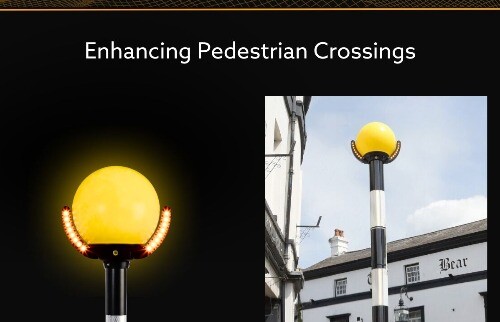

There are a number of pedestrian crossings designed to improve safety by controlling vehicle traffic and guiding pedestrians, cyclists, and equestrians. From zebra, pelican, and puffin crossings to toucan crossings, each type plays an important role in ensuring safe and efficient journeys for all road users.
From zebra crossings, which give pedestrians priority through clear road markings and flashing beacons, to signal-controlled pelican, puffin, and toucan crossings, every system is designed with safety and accessibility in mind. Puffin crossings use smart sensors to monitor pedestrian movement, and when they are waiting to cross, while toucan crossings allow both pedestrians and cyclists to cross safely together. These crossings all play a vital role in creating safer, more efficient journeys for everyone using the road network.
- Zebra crossings
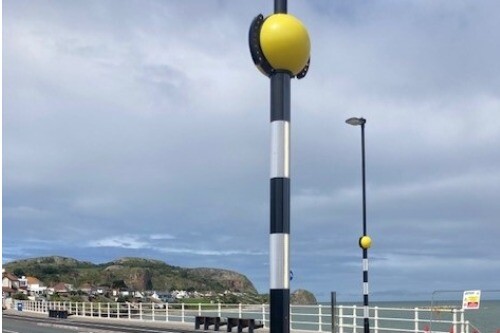
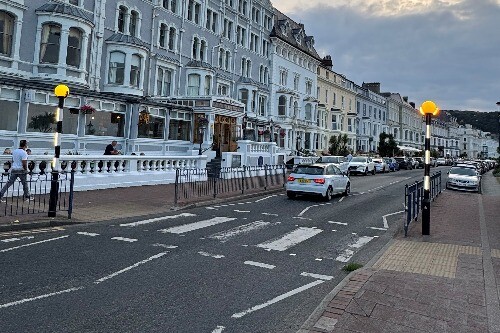
Zebra crossings provide continuous priority to pedestrians. These crossings are marked with black-and-white stripes and yellow flashing Belisha beacons, and drivers must stop when someone is waiting to cross or already on the crossing.
Typically, zebra crossings are installed on roads with speed limits below 35mph and without traffic signals.
- Pelican Crossings
Pelican crossings are pedestrian-controlled, signal-regulated crossings widely used across the UK. There are buttons on each side of the pedestrian crossing to press to cross the road. The button will activate the traffic light sequence, bringing traffic to a halt and allowing safe passage across the road.
The unique sequence for the traffic light is red, flashing amber, green, amber, red. When the amber light is flashing, drivers must give pedestrians on the crossing the right of way. For pedestrians, a flashing green man means do not start crossing, but finish if you are already crossing.
- Puffin crossings
Puffin crossings are smart, sensor-controlled pedestrian crossings in the UK. Unlike older crossings, they feature red and green signals on the near side of the road and sensors that detect pedestrians, cancelling the request if they leave or extending the time for slower walkers.
These sensors can cancel a crossing request if a pedestrian walks away before the lights change, helping to reduce unnecessary traffic delays. They can also extend crossing times for slower-moving pedestrians, improving safety and accessibility.
Why lighting and visibility is crucial
Pedestrians are among the most vulnerable road users, as they lack the physical protection that other vehicles provide. This makes visibility a key factor in staying safe.
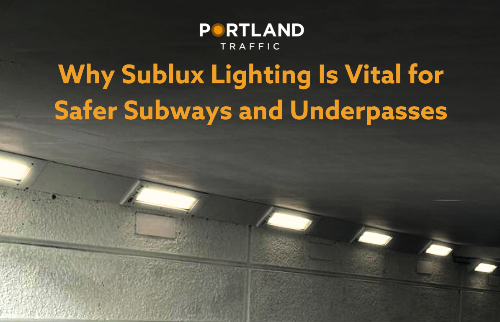
Lighting at pedestrian crossings helps transform a high-injury area into a safe, navigable space by improving visibility for both drivers and pedestrians. Effective lighting enables drivers to identify pedestrians farther away and react in time, helping reduce the risk of accidents and serious collisions.
Choosing the right crossing solution
Choosing the right crossing solution involves selecting a system that matches the location’s traffic volume, vehicle speed, and user requirements to maximise safety and efficiency.
It is important to place crossings along natural walking routes and ensure clear visibility for approaching drivers. Zebra crossings are typically best suited for low-speed traffic areas, whereas puffin and pelican crossings are best for busy and high-traffic areas. Toucan crossings are specifically designed for both pedestrians and cyclists and are wider than standard crossings, allowing cyclists to ride across rather than dismounting.
To find out more about the different types of pedestrian crossings, or for information about lighting products designed to improve crossing visibility and safety, contact us today 01922 666725 or sales@portlandtraffic.co.uk.